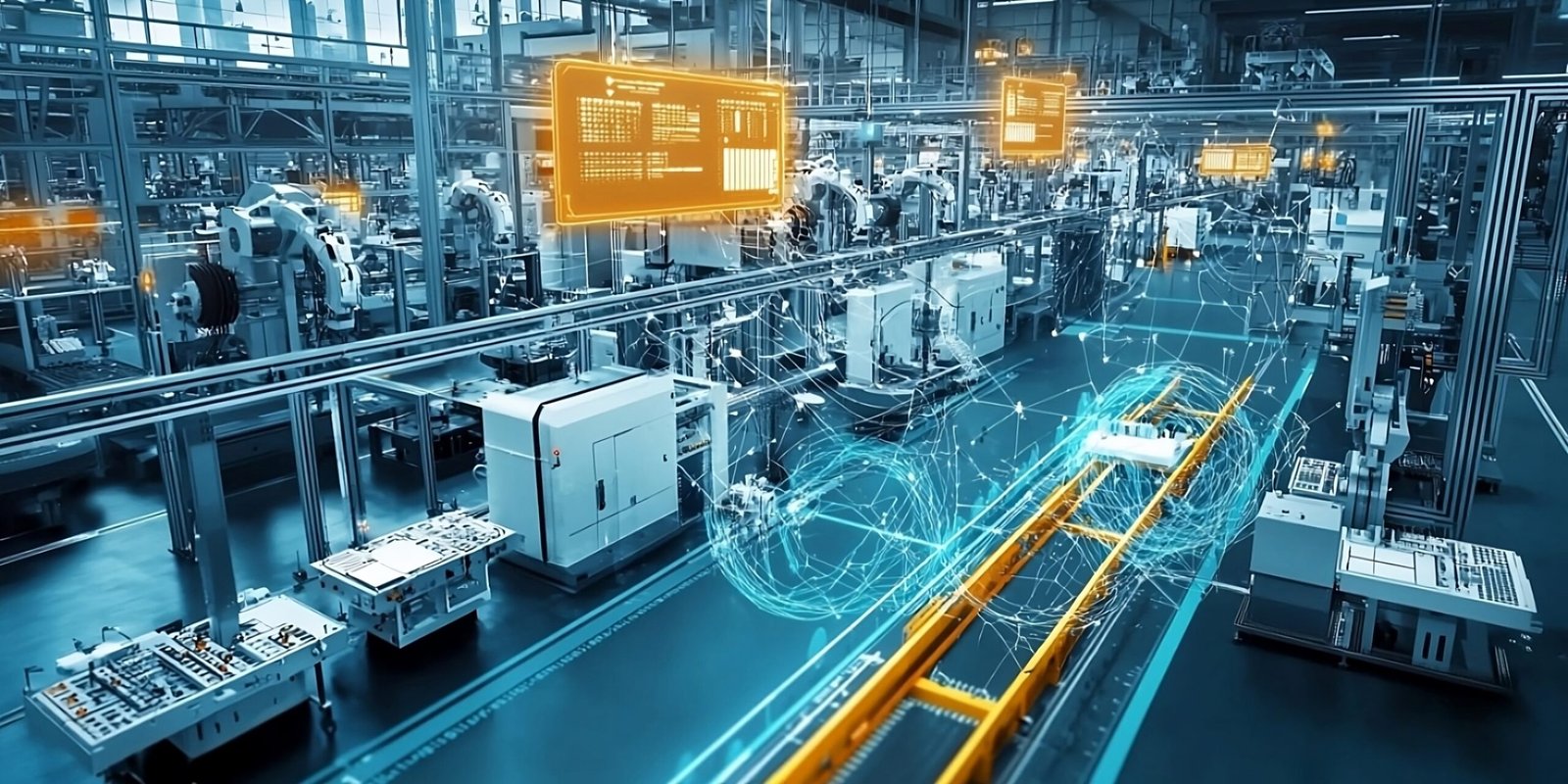
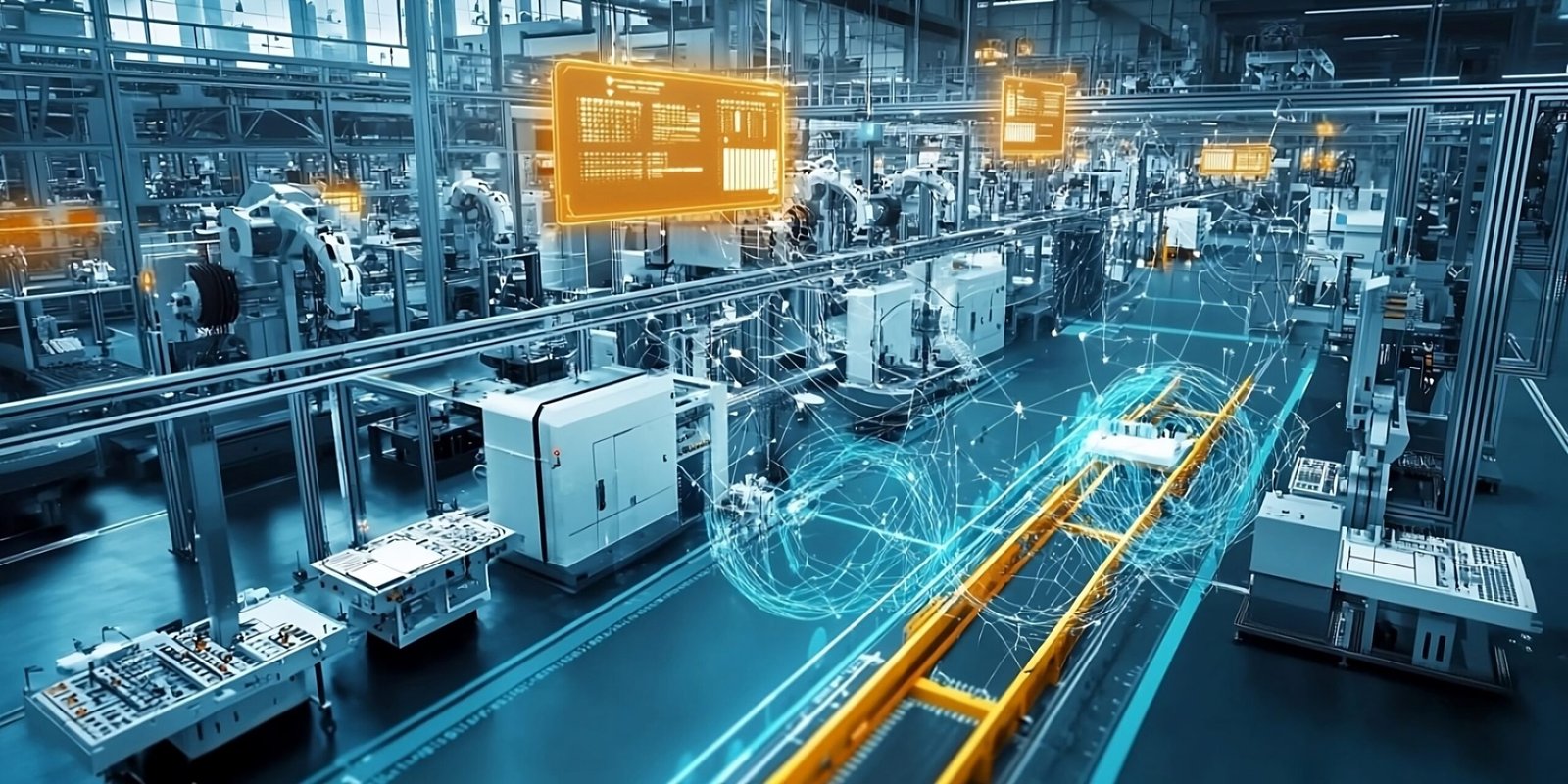
Industry 4.0 started as an initiative by the German government and research institutes like Plattform Industrie 4.0 and Fraunhofer. Their goal was simple: create industries where machines, systems, and people connect seamlessly to make operations smarter.
Over the years, organizations like IBM, the World Economic Forum, and industrial research bodies have expanded the framework, but the foundation is the same everywhere:
Industry 4.0 is built on a group of capabilities that combine sensors, data, automation, and software into one intelligent ecosystem.
Instead of memorizing a strict list of “pillars,” it’s easier and more practical to understand the capabilities Industry 4.0 unlocks. These capabilities show up across almost every operation, regardless of sector.
Let’s break them down in a simple way…
1. IoT + Smart Sensors (The Power of Connected Devices)
The first layer of Industry 4.0 is awareness.
Machines, tools, equipment, everything starts sensing and sharing data.
Smart sensors track:
- how assets are performing
- where they are
- what condition they’re in
whether something looks unusual
This is the foundation for asset tracking, real-time visibility, and early problem detection. Once this data starts flowing, everything else becomes possible. In many digital transformation projects, this is the first step teams take, making their physical world visible.

2. Big Data + Cloud + Edge (Data That Doesn’t Just Sit There)
Traditional factories and industrial setups always had data, they just didn’t use it deeply. Industry 4.0 changes that.
Instead of logs and spreadsheets, data flows into:
- the cloud for large-scale analysis
- edge systems for instant, local reactions
- dashboards that unify operations end-to-end
This allows teams to see patterns they couldn’t before, energy waste, idle time, bottlenecks, slow-performing equipment. It’s also the basis for predictive maintenance, because the system now knows what “normal” looks like and alerts you when something starts drifting away from it.
Behind the scenes, this requires strong backend engineering and smooth integration across devices, services, and applications, the kind of work that happens quietly and holds the system together.
3. Robotics + Workflow Automation (Smart Automation That Adapts)
Automation used to mean “machines doing repetitive tasks.”
Industry 4.0 pushes it much further.
Now automation workflows can:
- respond to sensor data
- adapt to changes automatically
- trigger actions across multiple systems
- keep processes running without manual intervention
Robots and automated systems no longer work in isolation. They’re part of a connected loop that takes decisions based on real-time information.

This is what creates the backbone of a smart factory, not just automation, but automation that thinks. Well-designed software here ensures that all moving parts work together instead of becoming one more complexity layer.
4. AI + ML + Analytics (Digital Intelligence for Better Decisions)
This is where Industry 4.0 becomes “smart.” AI processes the messy sensor data and transforms it into:
- predictions
- recommendations
- anomaly alerts
- optimization suggestions
Operators don’t just see the problem, they get context:
Why did this happen? What do I do next? How can we prevent it?
That’s assisted decision-making, people still stay in control, but the system gives them superpowers. Everything becomes faster, clearer, and more reliable because decisions are no longer based on gut feeling alone.
5. System Integration + CPS (A Unified Digital Thread)
Cyber-Physical Systems (CPS) are at the heart of the original German Industry 4.0 model.
In simple terms, it means: the physical machines and the digital systems operate as one unified, synchronized environment.
This is why:
- machines self-adjust
- production lines balance themselves
- workflows stay consistent
- data flows without friction across different components
It’s the final layer that brings everything together into a single connected ecosystem, not a collection of isolated technologies. Achieving this seamless integration quietly requires strong architectural thinking, clean communication between systems, and the ability to build reliable software that can scale and evolve.
This is the true promise of Industry 4.0:
a world where operations become visible, predictable, and self-improving.
And the transformation doesn’t have to be massive on day one. Most companies start with one capability, sensors, tracking, automation, analytics and build upwards step by step.
Looking to make your industrial systems smarter or more connected? Let’s talk at info@wonderbiz.in
Key Takeaway
Sensors bring visibility, automation brings speed, and analytics bring clarity,
together, they build intelligence into daily industrial operations.